The tracers
Interactive maps of the real code. Press Trace and the request walks itself, one function at a time, each linked to its source line.
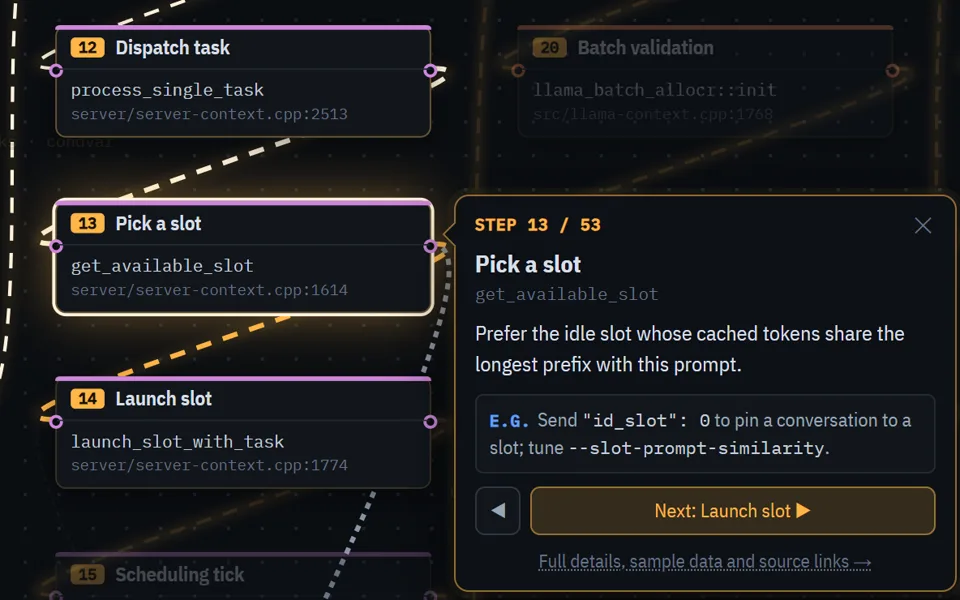
llama.cpp tracer
C++, 53 steps. One process, one inference thread. Watch the request get a slot, run through ggml on the GPU and stream back.
Open the tracer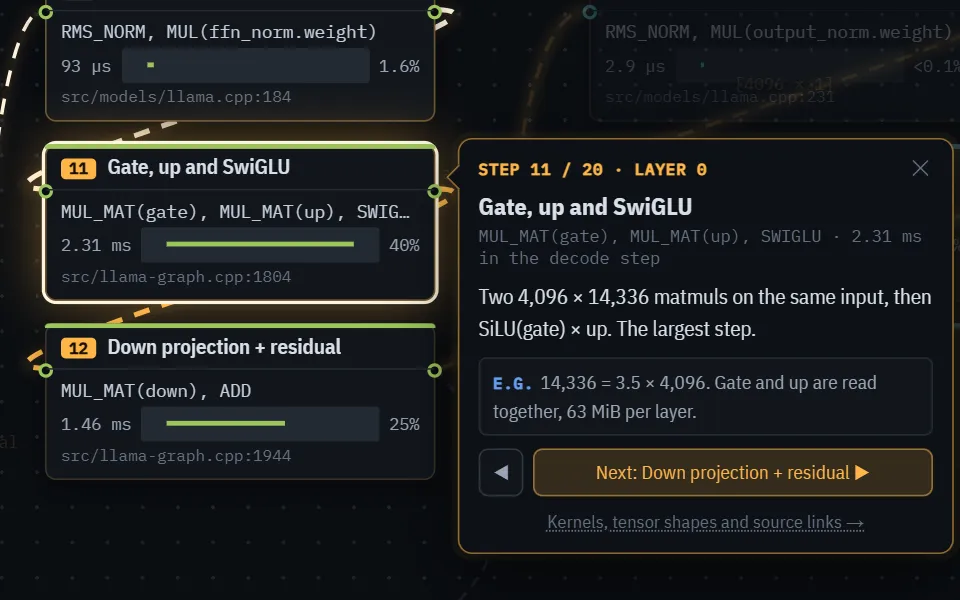
llama.cpp inference tracer
Zoomed in, 17 steps. One token through Llama 3.1 8B on the GPU, op by op, with each step's measured CUDA kernels.
Open the tracer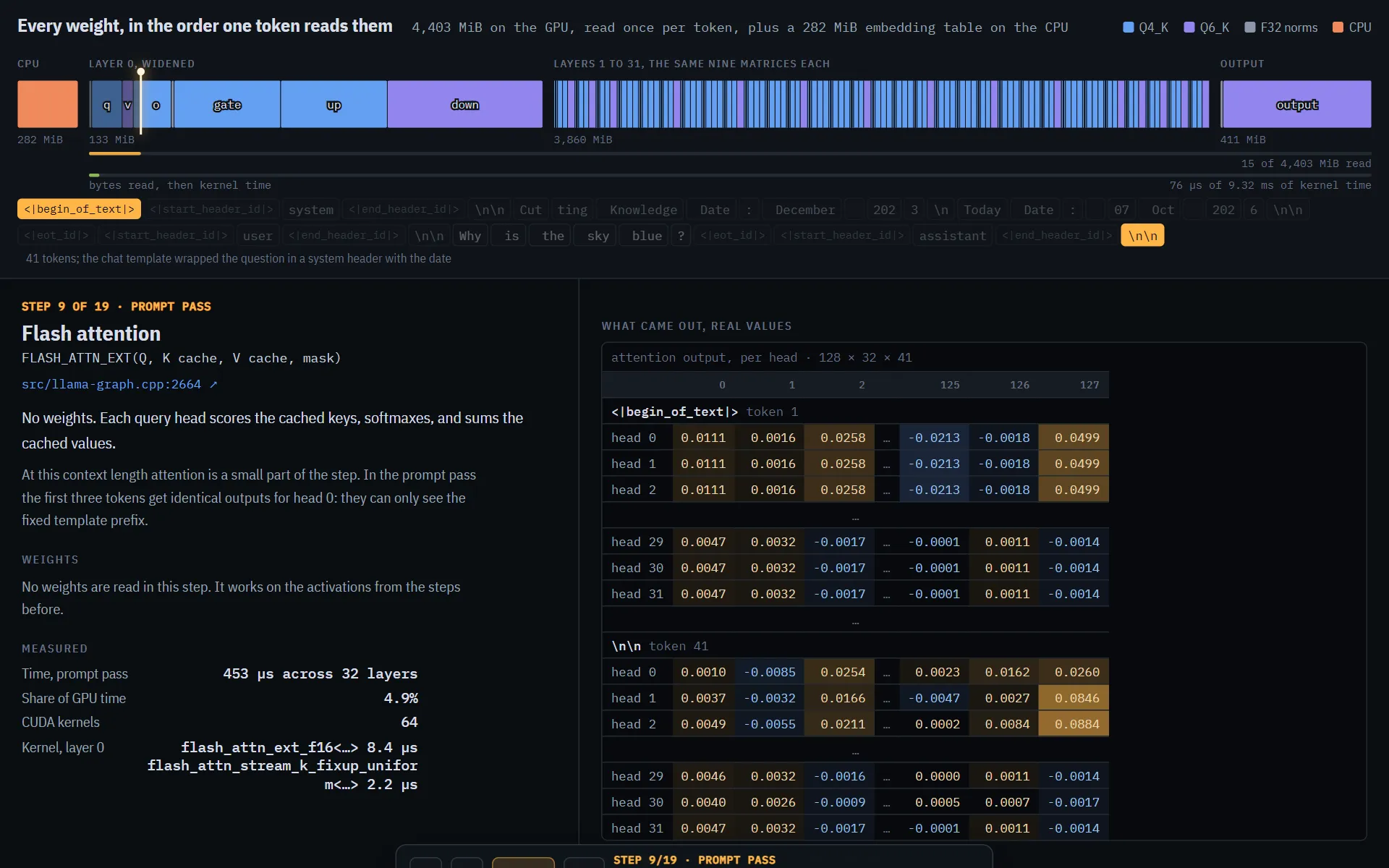
llama.cpp through the weights
The same pass as a 4.4 GB tape of weights, 19 steps. Each matrix in the order it is read, with the real numbers that came out.
Open the tape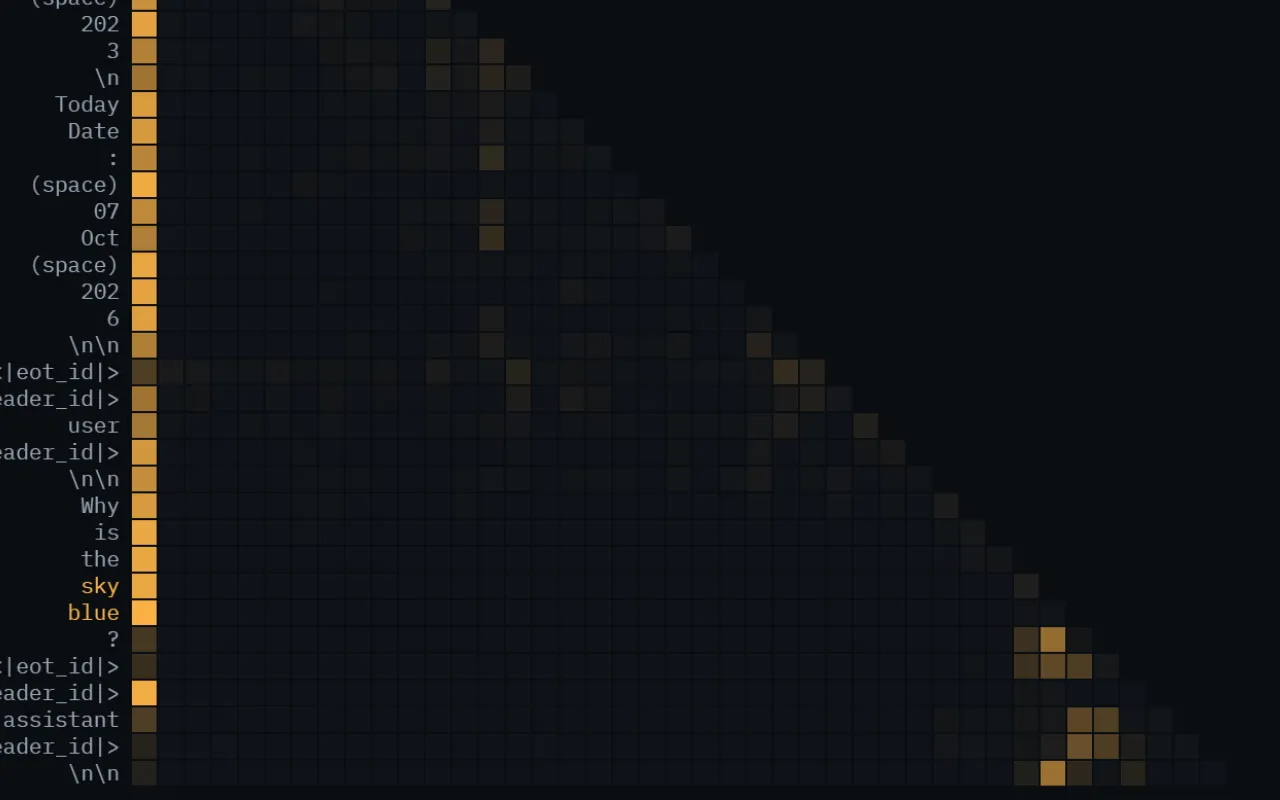
llama.cpp attention maps
Where all 1,024 heads look while reading “Why is the sky blue?”. A grid of every head, and a 41 × 41 map for each.
Open the maps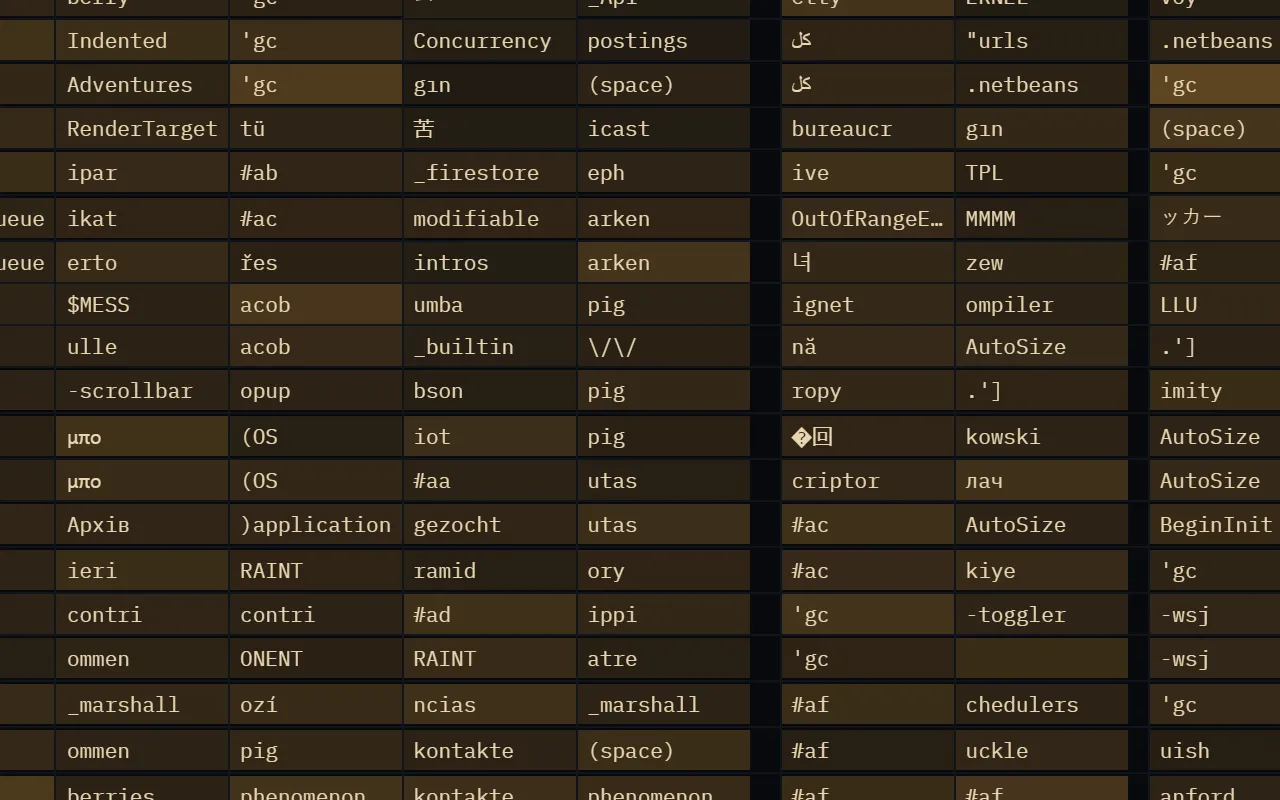
llama.cpp logit lens
What the model would say from every layer and position, how “The” forms in the last two layers, and which heads and feed-forward blocks wrote it.
Open the lens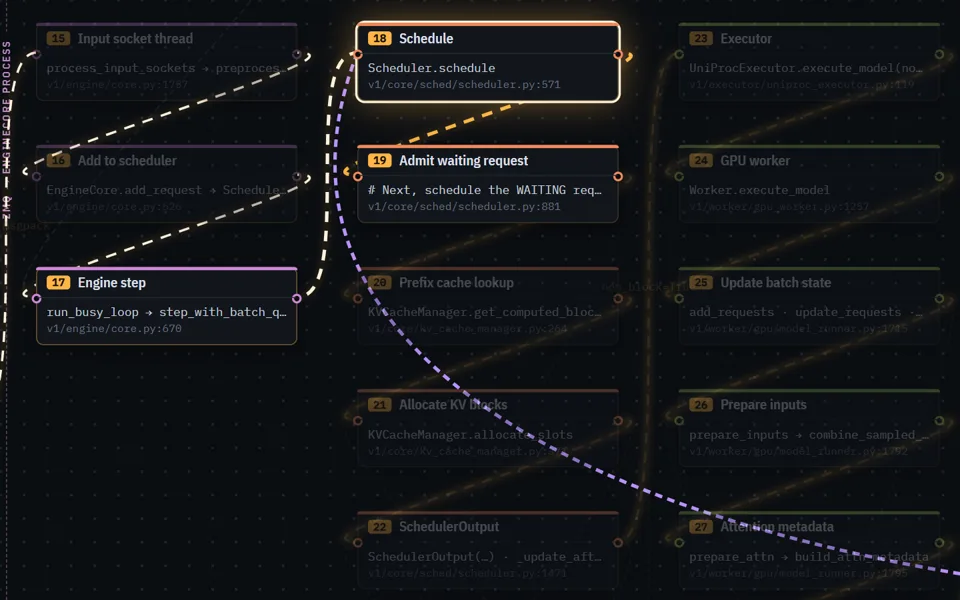
vLLM tracer
Python, 59 steps. Two processes over ZMQ, a token-budget scheduler and a paged KV cache.
Open the tracer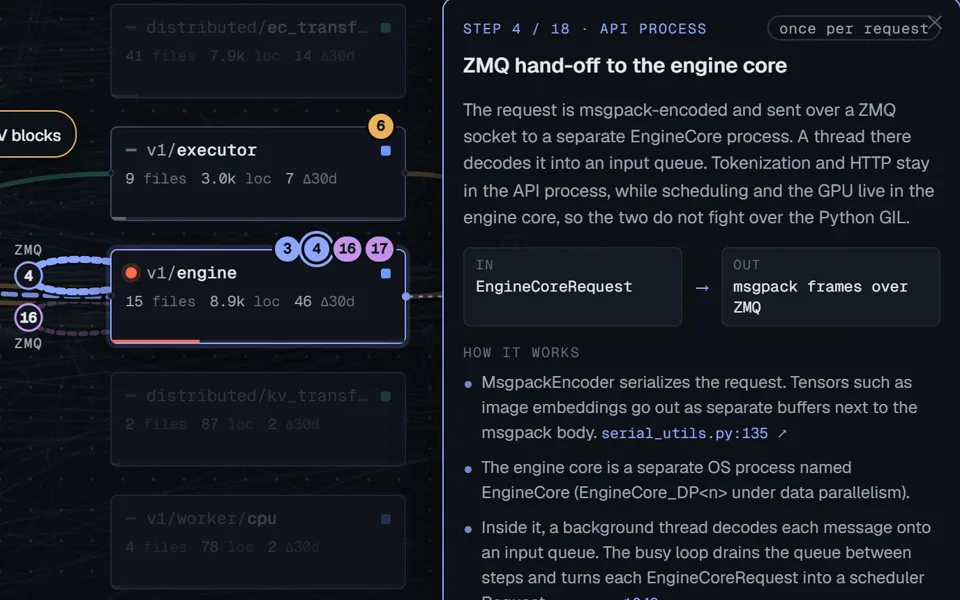
vLLM module map
Zoomed out, 18 steps. The same trip drawn across vLLM's 164 modules.
Open the mapStep with the arrow keys, click any box for details. Best on a laptop or bigger.